Over 15 years of experience
that you can rely on.
that you can rely on.
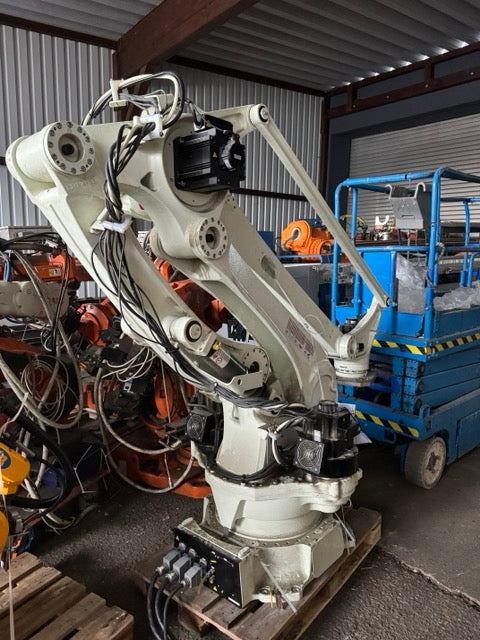
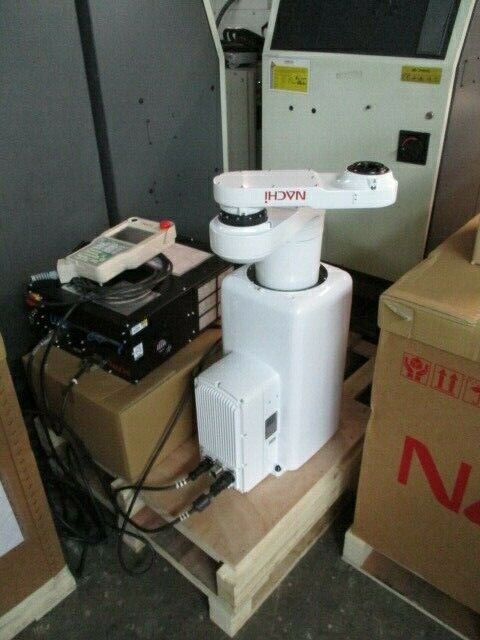
In this category, you'll find industrial robots, both new and inspected used, suitable for production, assembly, and automation. We carry systems from manufacturers including ABB Robotics , KUKA ,FANUC , Kawasaki , and YASKAWA Motoman – each with a clear description of the controller, number of axes, and scope of delivery. If you need to automate quickly and want to carefully balance budget and availability, you've come to the right place. For a quick selection, you can filter directly within the robot collection or contact us.
Robot KUKA KR10 R1100 sixx KRC4 Year of construction: 2014 Number of axes: 6 Max. load capacity: 6 kg Max. working area:...
View full detailsRobot KUKA KR10 R1100 sixx KRC4 Year of construction: 2014 Number of axes: 6 Max. load capacity: 6 kg Max. working area:...
View full detailsKUKA in-line wrist / wrist ZH6 II 00-119-854 NEW Used item – normal signs of wear, but still fully functional. Further details and pictures on...
View full detailsKUKA central hand KR15-2 wrist ZH15-2 type: TP010-EE-2-61-E Only mechanics Used goods - normal signs of wear. Further details and pictures o...
View full detailsKUKA ZH210/240 in-line wrist - robot arm - like new Has been completely overhauled by KUKA. Further details and pictures on request. Shipping...
View full detailsKUKA ZH210I in-line wrist - robot arm 00-106-447 - as good as new Has been completely overhauled by KUKA. Further details and pictures on requ...
View full detailsYaskawa Motoman robot SK-1A central hand Used item – normal signs of wear, but still fully functional. Further details and pictures on request...
View full detailsEWM acticARC Tetrix T352 AC/DC Robot TIG/WIG Welding Machine with Cooling Unit very good condition very little used Collection from 74722 Buch...
View full detailsRobot Yaskawa Motoman MH50 DX100 complete Control: DX100 Max. load capacity: 50 kg Max. working area: approx. 2061 mm Scope of delivery: R...
View full detailsRobot Yaskawa Motoman MH50 DX100 complete Control: DX100 Max. load capacity: 50 kg Max. working area: approx. 2061 mm Scope of delivery: R...
View full detailsRobot KUKA KR10 R1100 sixx KRC4 Year of construction: 2014 Number of axes: 6 Max. load capacity: 6 kg Max. working area:...
View full detailsRobot Fanuc S-500iB, R-J3iB with 7th axis/motor Year of construction: 8/2006 Controller: R-J3iB Number of axes: 6 Max. load capacity: 15 kg Max. ...
View full detailsRobot Fanuc S-500iB, R-J3iB with 7th axis/motor Year of construction: 8/2006 Controller: R-J3iB Number of axes: 6 Max. load capacity: 15 kg Max. ...
View full detailsRobot Fanuc S-500iB, R-J3iB with 7th axis/motor Year of construction: 8/2006 Controller: R-J3iB Number of axes: 6 Max. load capacity: 15 kg Max. ...
View full detailsRobot Fanuc S-500iB, R-J3iB with 7th axis/motor Year of construction: 8/2006 Controller: R-J3iB Number of axes: 6 Max. load capacity: 15 kg Max. ...
View full detailsRobot Yaskawa Motoman MH50 DX100 complete Control: DX100 Max. load capacity: 50 kg Max. working area: approx. 2061 mm Scope of delivery: R...
View full detailsRobot Yaskawa Motoman MH50 DX100 complete Control: DX100 Max. load capacity: 50 kg Max. working area: approx. 2061 mm Scope of delivery: R...
View full detailsRoboter ABB Robotics IRB 7600-325/3.1 M2004 Rob. Nr. 76-63643 - nur Mechanik Der 7600 gehört zur schwersten Reihe von Hochleistungs-Industrierobote...
View full detailsRoboter ABB Robotics IRB 7600-500/2.55 M2004 Rob. Nr. 76-63756 - nur Mechanik Der 7600 gehört zur leistungsstärksten Baureihe der Schwerlast-Indu...
View full detailsRoboter ABB Robotics IRB 7600-325/3.1 M2004 Rob. Nr. 76-63695 (20960 Betriebsstunden) - nur Mechanik Der 7600 gehört zu den schwersten Industrie...
View full detailsRoboter ABB Robotics IRB 7600-325/3.1 M2004 Rob. Nr. 76-63839 (16184 Betriebsstunden) - nur Mechanik Der 7600 gehört zu den schwersten Industrie...
View full detailsRoboter ABB Robotics IRB 7600-500/2.55 M2004 Rob. Nr. 7600-103651 - nur Mechanik Der 7600 gehört zur schwersten Reihe von Hochleistungs-Industrier...
View full detailsRoboter ABB Robotics IRB 7600-340/2.8 M2004 Rob. Nr. 76-63678 - nur Mechanik Der 7600 gehört zu den schwersten Industrierobotern von ABB. Dieses G...
View full detailsRoboter ABB Robotics IRB 6640-205/2.75 M2004 Rob. Nr. 66-75601 - nur Mechanik Dieser ABB-Roboter ist eine ABSOLUTE ACCURACY-Maschine. Der ABB Rob...
View full detailsWhether used, new, or factory-sealed: what matters is what fits your technical requirements, timeline, and budget. Used products often offer a clear price advantage and are frequently available at short notice. New or sealed units, on the other hand, come with current technology and a long remaining service life.
We make the condition transparent—for example with details on year of manufacture, operating time, and testing prior to shipment— and we’ll discuss openly which option makes the most economic sense. This way, you can decide with confidence whether used or new components are the better fit for your project.
Behind this offer is an owner with over 15 years of experience in automation and robotics. Instead of standardized replies, you get direct, expert advice—by phone, email, or via our contact form.
If you briefly share your application, rough technical requirements, and budget, we’ll propose suitable solutions and check which units are currently available or can be sourced at short notice. The goal is always a pragmatic, reliable recommendation so you can plan your project with confidence.